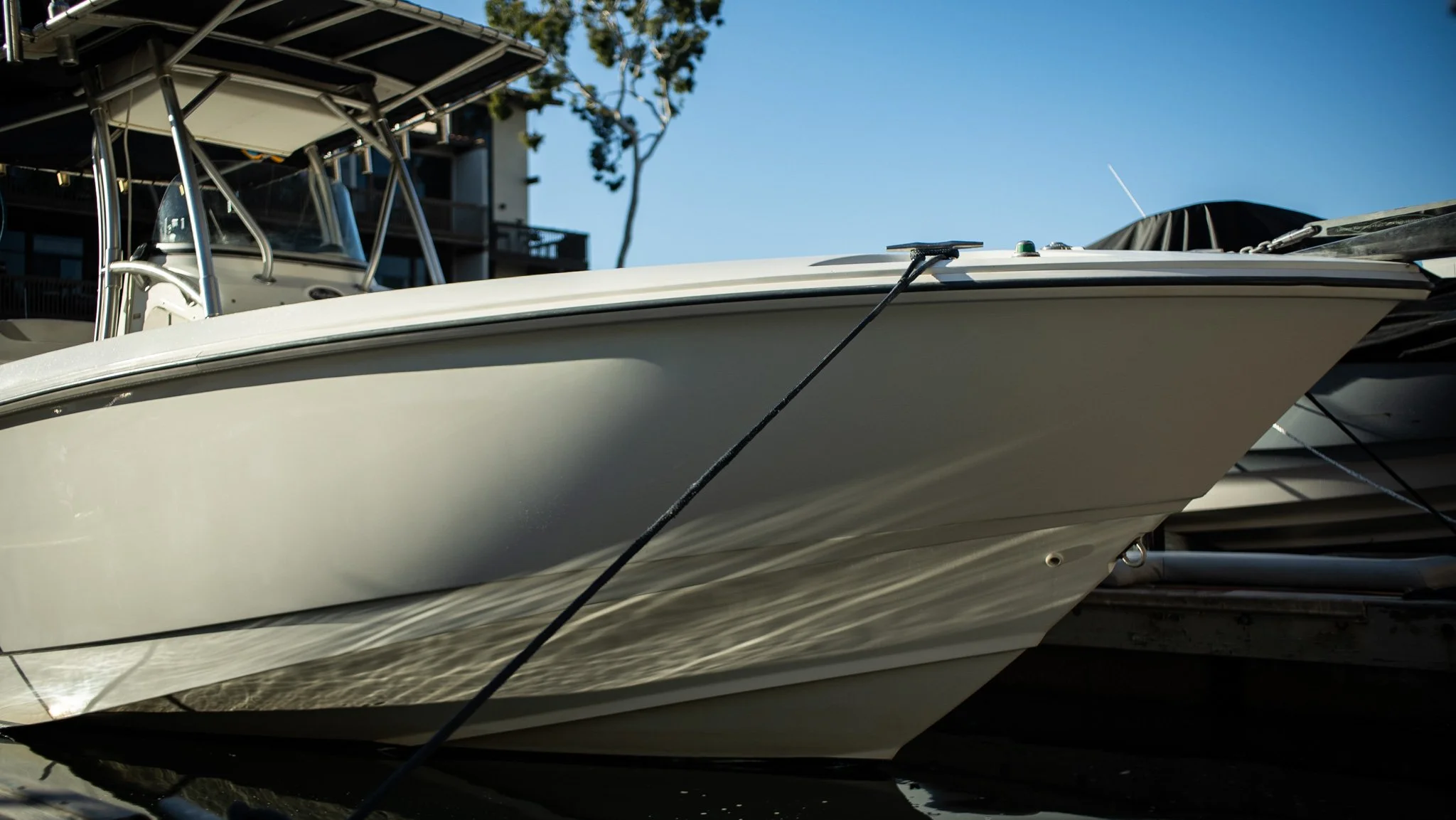
Keep the shine.
Protect the finish.
A professional boat detail can restore depth, gloss, and protection to your vessel’s finish—but maintaining that shine requires more than occasionally spraying the boat with a hose. Salt, mineral deposits, UV exposure, dirt, and improper washing techniques can quickly dull gelcoat and create fine scratches.
The good news is that routine maintenance does not need to be complicated. A careful wash, proper drying, and occasional application of a spray wax or sealant can help preserve your boat’s finish between professional details.
Affiliate disclosure: This article may contain affiliate links. If you purchase through one of these links, Proffitt Maritime may earn a small commission at no additional cost to you. We only recommend products we believe are useful for boat owners.
Why Routine Washing Matters
Boats in Southern California face constant exposure to sunlight, saltwater, marina dust, bird droppings, hard-water spots, and airborne contaminants. When these materials remain on the surface, they can gradually degrade protective wax or sealant and contribute to staining, oxidation, and loss of gloss.
Salt is particularly troublesome. Once seawater dries, salt crystals remain behind. Wiping a salty surface without rinsing it first can drag those crystals across the finish and create fine scratches.
Routine washing helps remove contamination before it becomes more difficult to correct. It also extends the life of the protection applied during a professional detail.
The Proper Boat Washing Sequence
Technique matters just as much as the products you use. Following the same sequence each time makes the process more efficient and reduces the risk of scratching the boat.
1. Work on a Cool Surface
Whenever possible, wash your boat in the morning, later in the afternoon, or in a shaded area. Avoid washing a surface that is hot from direct sunlight.
Heat causes soap and water to dry too quickly, leaving streaks and mineral deposits behind. If the boat cannot be moved out of the sun, work in small sections and rinse each section before it dries.
2. Rinse Before Touching the Surface
Begin with a thorough freshwater rinse from the top of the boat downward. The goal is to loosen and remove salt, dust, sand, and other debris before using a mitt or brush.
Pay particular attention to:
Railings and hardware
Windshields
Canvas supports
Non-skid areas
Drainage channels
Cleats and fittings
Areas where saltwater tends to collect
Do not immediately scrub a dry or salty surface. Pre-rinsing is one of the simplest ways to reduce wash-induced scratches.
3. Prepare a Marine-Safe Wash Solution
Use a soap specifically intended for boats and marine finishes. Household dish detergent may remove grease, but it can also strip wax and protective sealants from gelcoat.
Follow the manufacturer’s dilution instructions. Using extra soap does not necessarily improve cleaning and may make the surface harder to rinse without leaving residue.
For a safer washing process, consider using two buckets:
One bucket containing your soap solution
One bucket containing clean water for rinsing your mitt or brush
Rinsing the cleaning tool before returning it to the soap bucket helps prevent dirt from being transferred back onto the boat.
Recommended product: STAR BRITE Concentrated Boat Wash
Choosing the Right Wash Mitt or Brush
The correct cleaning tool depends on the surface and the amount of contamination.
Wash Mitts
A clean microfiber or soft chenille wash mitt is ideal for smooth gelcoat and painted surfaces that are within reach. A mitt provides better control and makes it easier to feel when dirt is trapped against the surface.
Rinse the mitt frequently. If it falls onto the dock or ground, do not place it back onto the boat until it has been thoroughly cleaned.
Recommended product:Car Wash Microfiber Mitts 2 Pack
Soft-Bristled Brushes
A soft, flagged-tip brush attached to an extension pole is useful for decks, cabin tops, and areas that are difficult to reach. The bristle ends should feel soft rather than stiff or sharp.
Keep separate brushes for different purposes. A brush used on non-skid decking may collect grit and should not later be used on polished hull surfaces.
A simple color-coded system can help:
One brush for smooth gelcoat
One brush for non-skid decks
One brush for especially dirty areas
Avoid stiff utility brushes, abrasive pads, and household scrubbers unless a marine professional has confirmed that they are appropriate for the specific surface.
Recommended product:52” Car Wash Brush with Long Handle
Wash From the Top Down
Begin with the highest and cleanest areas of the boat, then work downward toward the dirtier surfaces.
A practical sequence is:
Hardtop or cabin top
Windshield and upper structures
Interior fiberglass surfaces
Gunwales and exterior sides
Non-skid decking
Transom and swim platform
Work in manageable sections. Apply the soap solution, clean the area gently, and rinse it thoroughly before moving on.
Avoid letting soap dry on the surface. Dried soap residue can leave streaks and attract additional dirt.
Rinse Thoroughly
Once the boat has been washed, perform a final freshwater rinse from top to bottom. Check around hardware, rub rails, seams, hinges, and fittings for trapped soap.
Using a hose without a spray nozzle for the final rinse can help water sheet off smooth surfaces. The less water that remains on the boat, the easier the drying process will be.
Dry the Boat—Don’t Let It Air-Dry
Allowing a boat to air-dry is one of the most common causes of water spots. As water evaporates, it leaves minerals behind. These deposits can become especially noticeable on dark-colored hulls, glass, polished metal, and glossy gelcoat.
Use clean, absorbent microfiber drying towels or a synthetic marine drying cloth. Pat or gently glide the towel across the surface instead of pressing heavily.
Keep several towels available and replace them as they become saturated or dirty. Towels used near the deck, bilge access, or other contaminated areas should not be used on polished surfaces.
If your marina has particularly hard water, drying the boat promptly becomes even more important.
Recommended product: [Insert affiliate link to premium microfiber drying towels]
Maintain Protection With a Spray Wax or Sealant
Once the boat is clean and dry, a marine spray wax or maintenance sealant can help refresh gloss and extend the protection from a professional detail.
These products are not replacements for compounding, polishing, or a full wax or ceramic treatment. They are maintenance products designed to support the protection already on the surface.
Apply the product according to its instructions. In most cases, you should:
Work on a cool, clean surface.
Apply a small amount to one section.
Spread it evenly with a clean microfiber towel.
Buff the surface with a second dry towel.
Avoid allowing excess product to dry around hardware or textured surfaces.
More product is not always better. Heavy application can cause streaking and make the surface difficult to buff.
Before selecting a product, determine what is already protecting the boat. Some conventional waxes, polymer sealants, and ceramic coatings have different maintenance requirements.
Recommended product:STAR BRITE Premium Marine Polish
How Often Should You Wash Your Boat?
The ideal schedule depends on how the boat is stored and used.
As a general starting point:
After saltwater use: Rinse exposed surfaces and hardware with fresh water.
Every one to two weeks: Complete a maintenance wash for boats stored outdoors or in the water.
As needed: Remove bird droppings, fish residue, fuel spills, and other contaminants promptly.
Periodically: Apply a compatible spray wax or maintenance sealant according to product instructions and the condition of the finish.
Professionally: Schedule detailing when the surface begins losing gloss, feels rough, stains easily, or no longer sheds water effectively.
A boat exposed to frequent use, direct sunlight, and saltwater may require more attention than one kept covered in a protected location.
Mistakes That Cause Scratches or Oxidation
Even frequent washing can damage the finish when the wrong methods are used.
Washing Without Rinsing First
Wiping salt, sand, or marina dust across a dry surface can create fine scratches. Always rinse loose contamination away before touching the finish.
Using Household Dish Soap
Strong detergents can remove wax and shorten the life of protective products. Use a pH-balanced marine soap intended for routine washing.
Using One Brush for Everything
A brush that has collected grit from non-skid decking or a dirty swim platform should not be used on polished gelcoat.
Allowing Soap or Water to Dry
Direct sunlight and hot surfaces accelerate drying, producing streaks and mineral deposits. Work in smaller sections when necessary.
Using Dirty Towels
A towel may look clean while still containing sand, dried product, or other abrasive material. Wash detailing towels separately and retire any towel that becomes rough or heavily contaminated.
Scrubbing With Abrasive Pads
Household scouring pads and aggressive brushes can permanently alter the surface. Test unfamiliar tools in an inconspicuous location—or consult a professional first.
Ignoring Small Stains and Contamination
Bird droppings, rust runoff, fish residue, and other contaminants can stain or etch the finish when left in place. Address them promptly with a product appropriate for the affected material.
Waiting Until the Finish Is Heavily Oxidized
Routine washing and protection help delay oxidation, but they cannot reverse severe deterioration. Once gelcoat becomes chalky or noticeably faded, professional correction may be necessary.
A Simple Between-Detail Maintenance Kit
A practical kit does not need dozens of products. Start with:
Marine-safe boat soap
Two wash buckets
Soft wash mitt
Soft flagged-tip deck brush
Extension pole
Several microfiber drying towels
Separate microfiber application and buffing towels
Compatible marine spray wax or sealant
Freshwater hose and adjustable nozzle
Store clean towels and wash tools in a sealed container so they do not collect dock dust or debris between uses.
Protect the Finish—and Your Investment
Maintaining your boat’s shine is not only about appearance. A clean, protected surface is easier to inspect and can make corrosion, cracking, leaks, failing sealant, and other developing problems easier to notice.
Consistent care between professional details helps preserve the finish, reduces the amount of correction required later, and keeps your boat ready to enjoy.
Need Professional Boat Care in Southern California?
Proffitt Maritime provides mobile boat washing, detailing, maintenance, electrical work, and vessel inspections throughout our Southern California service area.
Whether your boat needs a maintenance wash, oxidation correction, protective treatment, or a broader inspection, we can help determine the appropriate level of service.